Fractals, intricate and self-repeating patterns found abundantly in nature, have an amazing ability to evoke feelings of awe, tranquillity, and pleasure in humans. We often feel calm and relaxed when we see fractal patterns. There are many reasons for this innate emotional response.

At a cognitive level, our brains are naturally wired to efficiently process patterns and symmetries. Our eyes use a search pattern that is a fractal. They first scan big elements, then pass again searching for the smaller versions of the elements in a mathematical fractal dimension. Also, fractals present a unique combination of complexity and simplicity, capturing our attention while also allowing our minds to follow their repetitive structures. This engagement and ease on the eyes prompts a sense of cognitive harmony, as our brains derive pleasure from recognising and interpreting these patterns. Do you find your eyes easily following the patterns in the photo of the fern below?

Fractal patterns of fern on my walk in Karuizawa, Japan.
Evolutionary psychology also plays a role. Throughout human history individuals who were attuned to the subtle patterns and variations in their environments were more likely to identify potential threats or resources. Fractals, which appear in natural phenomena ranging from coastlines to trees to clouds, may have been indicative of a healthy and rich environment. As a result, an inherent preference for fractal-like patterns could have been favoured by natural selection, leading to the positive emotional responses we experience today. We all love to gaze at coastlines, for example, like the one below.

Coastline on my visit to Kefalonia.
Fractals tap into the concept of “biophilia,” the innate human tendency to seek connections with nature and other forms of life. When we encounter fractals in the world around us, our brains resonate with the familiar, even if we are not consciously aware of the scientific principles behind them. This resonance can evoke a sense of comfort and belonging, reminding us of our deep-rooted connection to the natural world. Take a look at the photos below. Which photo below evokes a more comforting feeling?
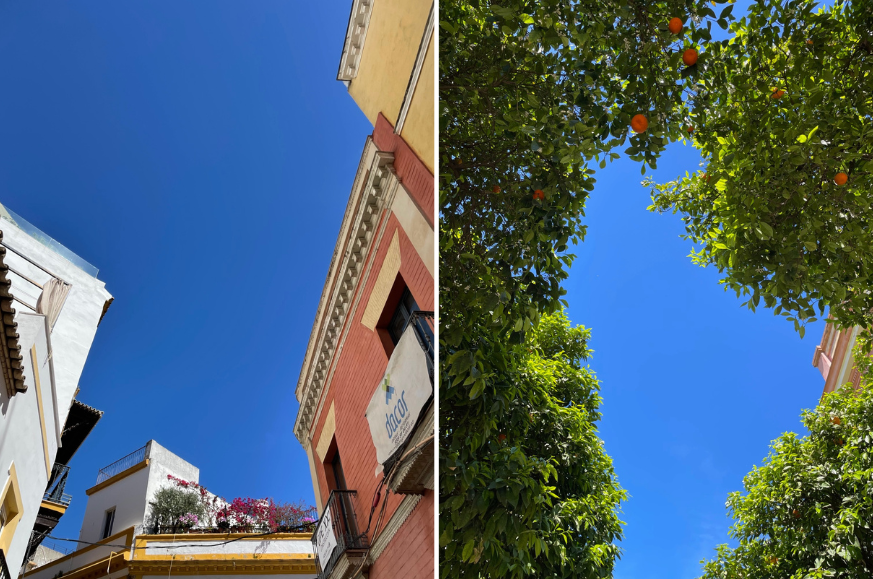
Sky with buildings v trees on my visit to Sevilla.
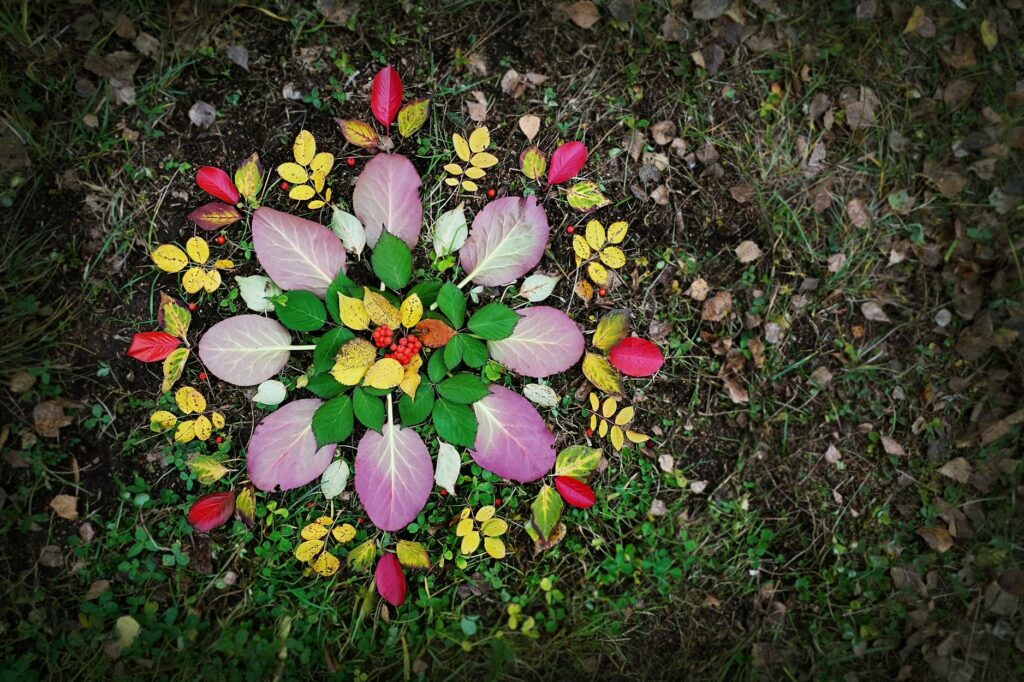
Fractals can also induce a state of mindfulness and relaxation. The repetitive nature of fractal patterns can guide our attention, fostering a form of meditation where our focus narrows to the present moment. This meditative quality can reduce stress and anxiety, as our minds find solace in the orderly and structured intricacies of fractals. Making symmetrical mandalas, for example, can be a relaxing way to spend mindful time, whether in nature or on paper. Next time you are in the forest, try making your own nature mandala.
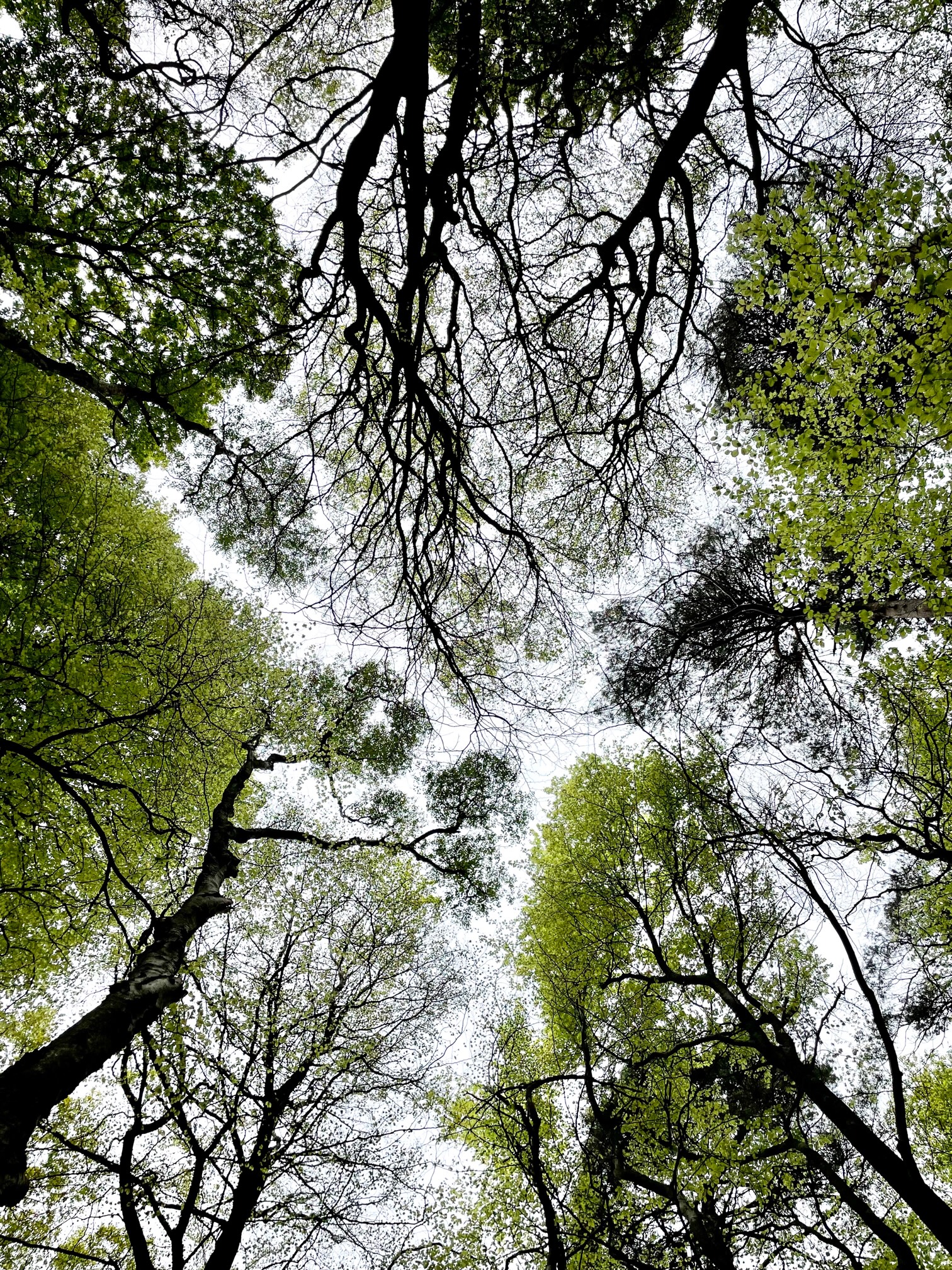
Research in psychology and neuroscience has also shown that exposure to natural patterns, including fractals, can have physiological benefits, including decreased heart rate, lowered blood pressure, and reduced levels of stress hormones. These physiological responses contribute to the overall positive feelings we associate with encountering fractals in nature, like the patterns in the tree canopy below.

Fractal patterns of a tree canopy on one of my walks in the Surrey Hills.
The aesthetic appeal of fractals is another facet of their emotional impact. Artists, architects, and designers often incorporate fractal-like patterns into their creations, as these patterns possess a unique blend of complexity and aesthetic harmony. In fact, Jackson Pollock paintings have been mathematically shown to be of fractals. In contrast to his previous urban life in Manhattan, Pollock perfected his pouring technique surrounded by the complex patterns of nature. In fact, a stash of so-called Jackson Pollock paintings that were found were proven to be fakes by the scientist Richard Taylor, who studied Pollock’s paintings and determined that authentic Pollock paintings were all patterned with tiny fractals. Later, these paintings were chemically shown to have used paints that were not available while Pollock was alive, supporting Taylor’s conclusion. Have a go creating your own Pollock style paintings here!

My attempt with the Jackson Pollock app.
Now that you know the benefits and allure of fractals, you will start to notice them around you. They may evoke warm, comforting, positive feelings and offer benefits to your wellbeing. Nature provides an abundance of fractals. Next time you are in nature, I invite you to notice fractals around you.

