You can catch me purposely brushing my hands through stinging nettles on walks and runs around the Surrey Hills. Why? Because after doing this for two springs in a row, I noticed that I had no arthritis pain during the winters that followed. Last summer, I forgot to do it—and sure enough, the arthritis returned. It’s an old practice called urtication, and I can personally vouch for its power.
Male nettle plant
The Generous Nettle: Food, Medicine & Folklore
Often overlooked as a common weed, nettle is one of the most nutritious, medicinal, and versatile plants in the wild. In folklore, it was believed to ward off evil, boost vitality, and offer protection. Its sting, though sharp, has long hinted at its potent gifts.
Leaves: Mineral-Rich & Medicinal
Harvest young leaves in early spring (the top 4-6 leaves), before flowering. These are packed with iron, calcium, magnesium, silica, and vitamins A, C, and K, making them ideal for soups, teas, or cooked like spinach. You can also use them to colour your cake green! I make a yummy moss inspired nettle cake. You can click this LINK for the recipe. Some of the nettles exposed to more sun are just starting to show their seeds, so you need to be quick! Only pick the top 4-6 leaves.
Medicinally, nettle leaves are:
Anti-inflammatory – excellent for joint pain and arthritis
Antihistamine – reduces hay fever and seasonal allergies
Diuretic – supports the kidneys and urinary system
Mineral-rich – helps with fatigue, anaemia, and general vitality
Make a daily infusion by steeping dried nettle overnight, or drink fresh tea to enjoy its benefits. Or, like I do, practice urtification!
Nettle is a dioecious plant, meaning male and female flowers grow on separate plants. The term comes from Greek: di-(two) and oikos (house). Two households, instead of one, compared to monoecious plants, where the male and female live in one household! You’ll see the difference on how the seeds droop on the female plants, and flowers stick out nearly horizontally on the male plants. Don’t worry if you confuse them. You just get more nutrients from the female seeds, with higher concentration of essential fatty acids, vitamins, minerals, and antioxidants.
Female nettle plant
Seeds: Restorative & Energising
Nettle seeds ripen in mid to late summer and can be harvested once they droop and firm up. They act as a gentle adaptogen, supporting adrenal health, mental clarity, and energy levels—perfect for burnout or exhaustion.
Use raw or dried, sprinkled on food like porridge and yogurt, or infused in honey. A little goes a long way! You can also make delicious chocolate nettle bites by blending dark chocolate, dates, coconut oil, shaping the scoops of the mixture into little balls, then roll them into nettle seeds. Click on this LINK for the recipe.
Roots: Deep Medicine
Best harvested in autumn or early spring, nettle root supports hormonal balance, prostate health, and urinary issues, particularly in men. Roots are commonly prepared as tinctures or decoctions.
A Natural Antidote
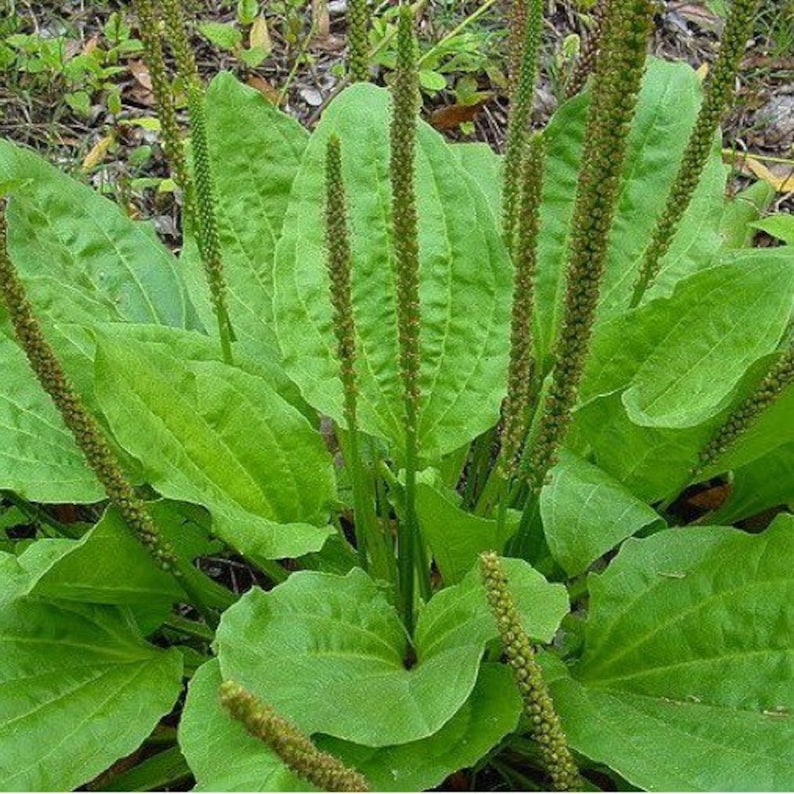
Broadleaf plantain (Plantago major)
If you do get stung, look nearby for plantain (Plantago major or P. lanceolata). Crush the leaves and rub them onto the sting—it’s a reliable remedy for reducing itch and inflammation.
Next time you see a patch of nettles, don’t walk around it—pause. This humble plant might just be the most generous ally on the path.
Enjoy the sunshine and I hope I gave you a reason to keep nettle in your garden!
We use cookies on our website to give you the most relevant experience by remembering your preferences and repeat visits. By clicking “Accept All”, you consent to the use of ALL the cookies. However, you may visit "Cookie Settings" to provide a controlled consent.
This website uses cookies to improve your experience while you navigate through the website. Out of these, the cookies that are categorized as necessary are stored on your browser as they are essential for the working of basic functionalities of the website. We also use third-party cookies that help us analyze and understand how you use this website. These cookies will be stored in your browser only with your consent. You also have the option to opt-out of these cookies. But opting out of some of these cookies may affect your browsing experience.
Necessary cookies are absolutely essential for the website to function properly. These cookies ensure basic functionalities and security features of the website, anonymously.
Cookie
Duration
Description
cookielawinfo-checkbox-advertisement
1 year
Set by the GDPR Cookie Consent plugin, this cookie is used to record the user consent for the cookies in the "Advertisement" category .
cookielawinfo-checkbox-analytics
11 months
This cookie is set by GDPR Cookie Consent plugin. The cookie is used to store the user consent for the cookies in the category "Analytics".
cookielawinfo-checkbox-functional
11 months
The cookie is set by GDPR cookie consent to record the user consent for the cookies in the category "Functional".
cookielawinfo-checkbox-necessary
11 months
This cookie is set by GDPR Cookie Consent plugin. The cookies is used to store the user consent for the cookies in the category "Necessary".
cookielawinfo-checkbox-others
11 months
This cookie is set by GDPR Cookie Consent plugin. The cookie is used to store the user consent for the cookies in the category "Other.
cookielawinfo-checkbox-performance
11 months
This cookie is set by GDPR Cookie Consent plugin. The cookie is used to store the user consent for the cookies in the category "Performance".
viewed_cookie_policy
11 months
The cookie is set by the GDPR Cookie Consent plugin and is used to store whether or not user has consented to the use of cookies. It does not store any personal data.
Functional cookies help to perform certain functionalities like sharing the content of the website on social media platforms, collect feedbacks, and other third-party features.
Performance cookies are used to understand and analyze the key performance indexes of the website which helps in delivering a better user experience for the visitors.
Analytical cookies are used to understand how visitors interact with the website. These cookies help provide information on metrics the number of visitors, bounce rate, traffic source, etc.
Cookie
Duration
Description
_ga
2 years
The _ga cookie, installed by Google Analytics, calculates visitor, session and campaign data and also keeps track of site usage for the site's analytics report. The cookie stores information anonymously and assigns a randomly generated number to recognize unique visitors.
_ga_NFSVZETETS
2 years
This cookie is installed by Google Analytics.
_gat_gtag_UA_109229246_28
1 minute
Set by Google to distinguish users.
_gid
1 day
Installed by Google Analytics, _gid cookie stores information on how visitors use a website, while also creating an analytics report of the website's performance. Some of the data that are collected include the number of visitors, their source, and the pages they visit anonymously.
Advertisement cookies are used to provide visitors with relevant ads and marketing campaigns. These cookies track visitors across websites and collect information to provide customized ads.