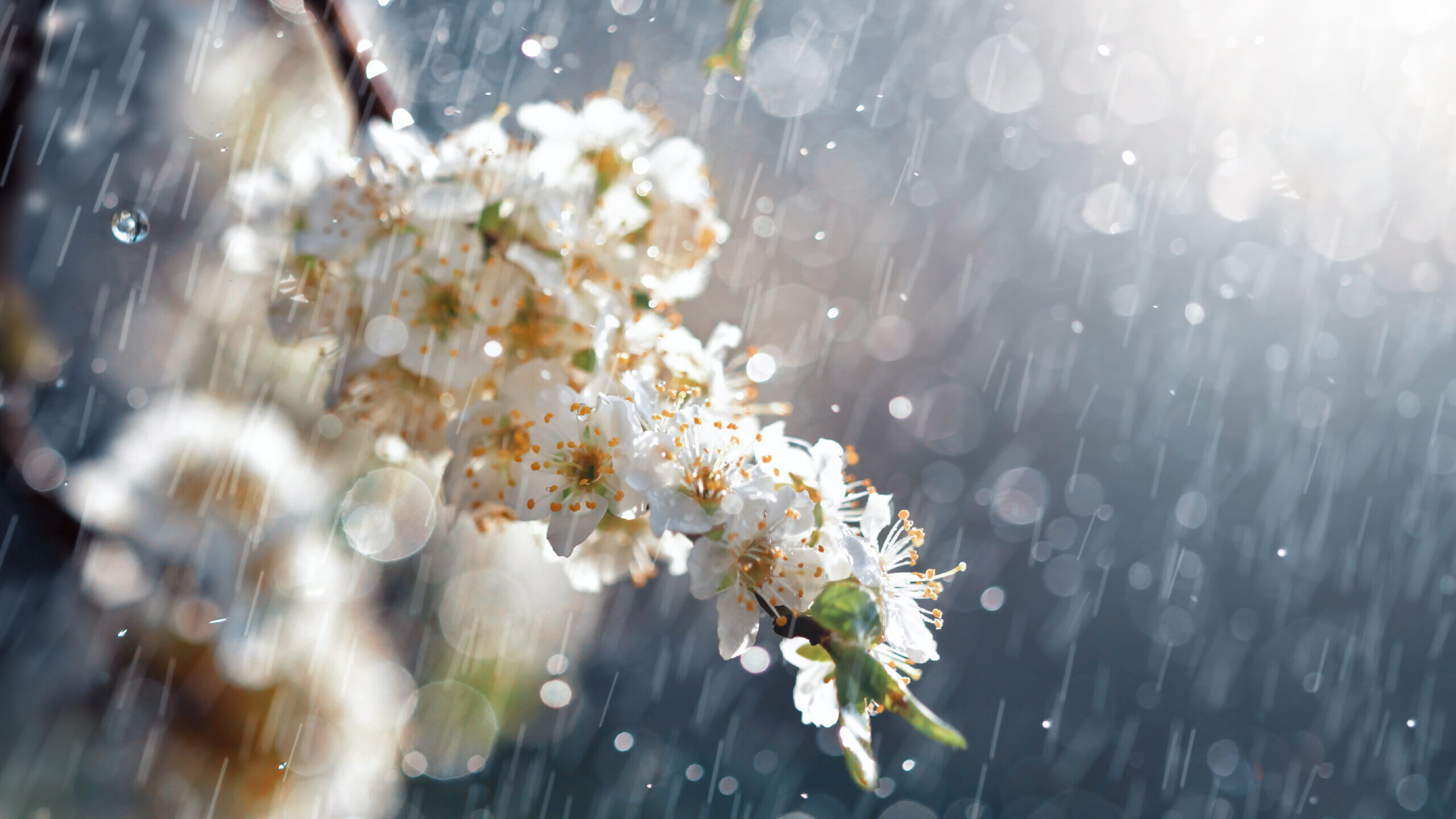
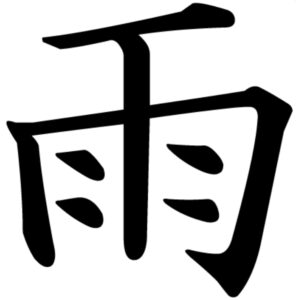
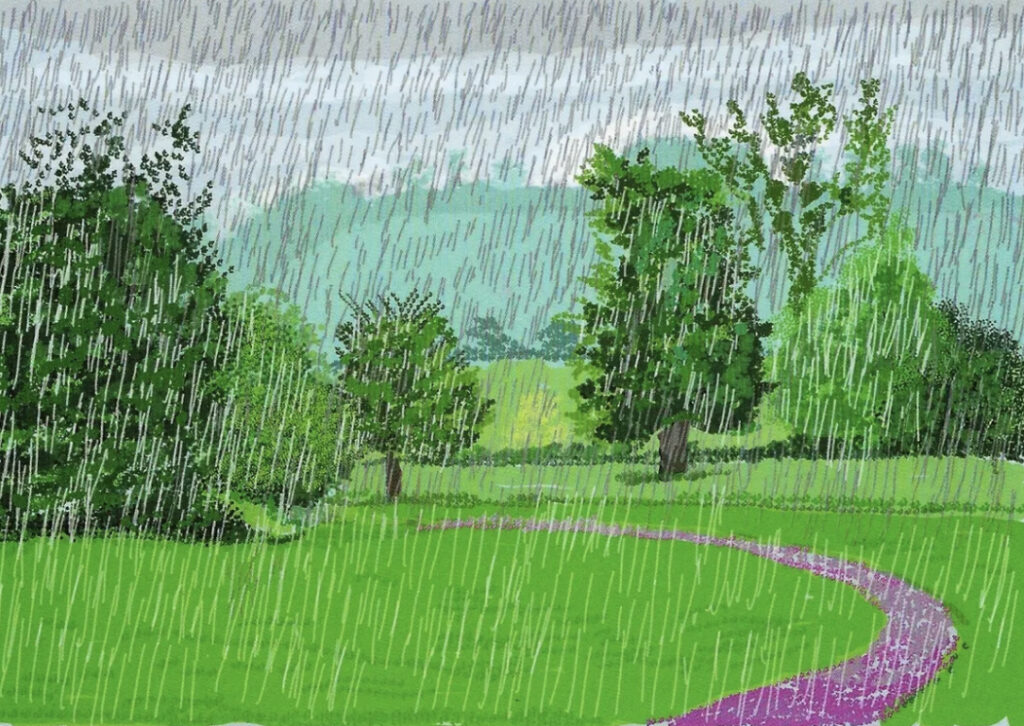
When you are caught in the rain next week (beginning of June), would it be different to the kind of rain that fell on you last week (end of May)? According to the Japanese, yes. The Japanese word for rain in spring is ‘SHUNRIN’ and for early summer is ‘RYOKUU’. In fact, if the rain last week (end of May) was quite gentle, then it would be called ‘SHUN U’, meaning light rain in the spring. If the rain had a cooling effect, then it would be called ‘RYOUU’, but if it was a bit chilly, then it would be called ‘REIU’.
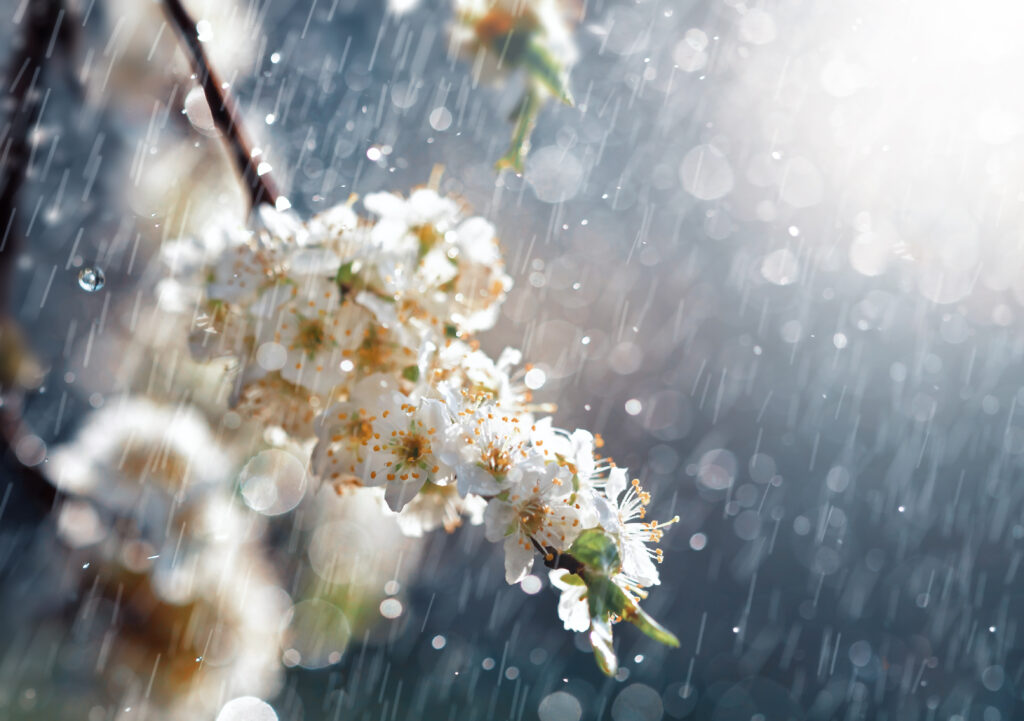
Then there is rain that falls specifically on cherry blossoms, ‘HANA NO AME’, dripping from the trees and blossoms, also evoking a bit of sadness with the possibility of the rain washing away the delicate petals. There is also ‘TSUYU’, which literally means plum rain in the months of June and July, when plums are ready to harvest. It is also the term used for the rainy season, which is in June and July. When rain falls in late summer after a dry spell, it is called ‘KIU’, which literally translates to Joyous Rain. Farmers are joyous for the rain fall at this time.
There are in fact over 50 different words for rain in Japan. Why are there so many ways of expressing rain in Japanese? Firstly, Japan is a very rainy country. Last year the average rainfall was 1,770 mm, which is almost double the global average. Unlike other countries in Asia, which also have a monsoon season, Japan has no dry season. Rain falls throughout the year, with precipitation formed by different seasonal meterological phenomena. The variation in seasonal weather sources bring about different characteristics in rain.
The various expressions for rain is a reflection of Japanese culture. Noticing and appreciating the annual, seasonal, monthly, weekly and daily changes in the natural world is very important in traditional Japanese culture. If you’ve been to a few of my forest bathing sessions, you may remember me mentioning the Japanese word Yugen, which means a profound, mysterious sense of beauty of the universe and the impermanence of this beauty. In my last newsletter, I wrote about Hanami, the Japanese tradition of enjoying the view of cherry blossoms. Observing nature is a favourite pastime in Japan and the observation of rain is one of the more popular natural phenomenon. The Japanese, especially their poets, found so many special expressions to capture Japan’s many types of rain.
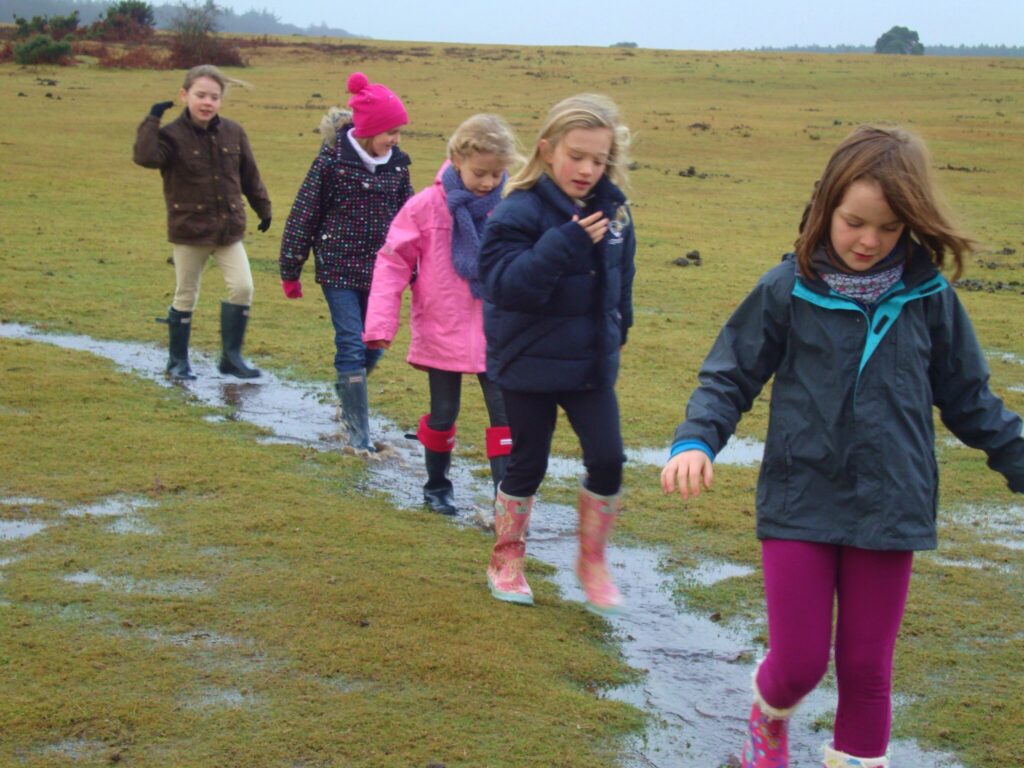
Next time you are caught in the rain, and we do have a lot of rain here in England, whether on a woodland walk, in the middle of town, sitting in your garden or forest bathing, I invite you to think of a name for that particular rain fall. If you tune into your senses, you might come up with some interesting and appropriate names. I would be interested in finding out some of your rain names, so please email them to me!
Shizen Meditation
Did you know that regular meditation practice changes the structure of your brain? Research has shown it to affect the areas of your brain, such as the amygdala, medial prefrontal cortex and the posterior cingulate cortex, helping to relieve stress — as well as manage anxiety, reduce inflammation, and improve memory and attention.
Furthermore, research shows that the longer you practice meditation, the better your brain will be at self-regulation, making it easier to get yourself into a more relaxed state.
With Hinoki SHIZEN MEDITATION, we start with 15 minutes of nature-based mindfulness to calm your mind and body, followed by a 45 minute meditation and finally foraged tea, homemade foraged-based treats and a chat with like-minded members.
We have space for a few more members, so please do email me for your first free session. After that, all you have to do is register online to book your space. You are not obligated to attend a set number of sessions.

Thank you for reading my HINOKI Insight. I hope you have a lovely summer ahead and look forward to seeing you at one of my events!
With warmest wishes,
Lisa

