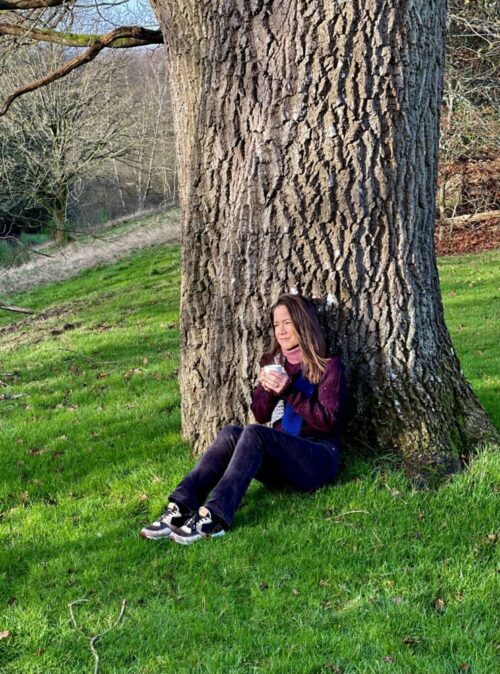
As the temperature has dropped, I have introduced the tea tasting earlier in the forest bathing sessions so that we could have tea with a tree, and in doing so, keeping us warm. If you have been to one of my more recent sessions, you will have tried my pine needle tea. That is what I would like to talk about in my HINOKI newsletter this month.
Did you know that pine needles have been used by herbalists and native Americans for centuries?
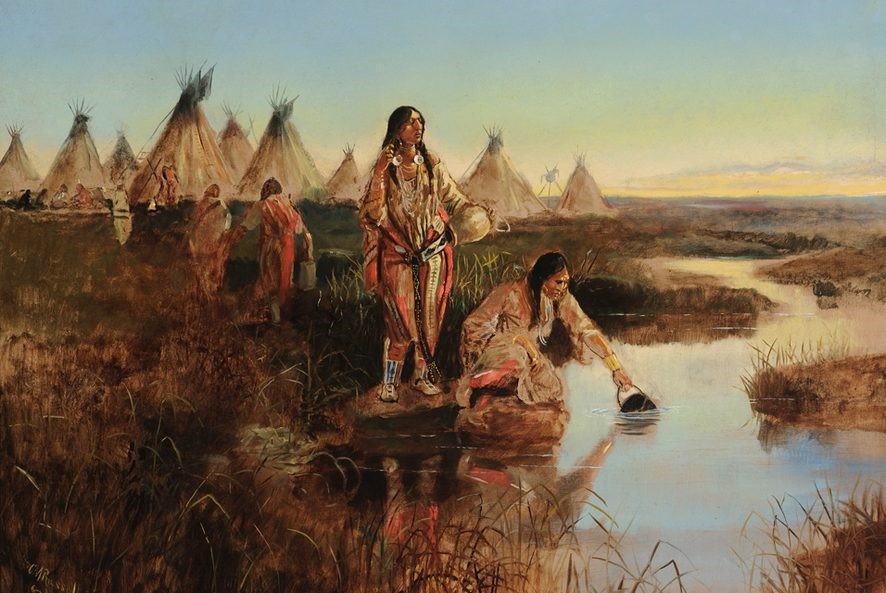
Pine needle tea contains more vitamin C than fresh orange juice (assuming you ate the pine needles too!). Native Americans drank this tea both to prevent illness and to treat coughs and colds. They introduced European settlers to this delicately flavoured tea as a way to combat scurvy. Historians also believe that Taoist priests consumed pine needle tea for centuries for its healing properties and because they believe it slowed the ageing process.
As a safety note, all pregnant women should avoid drinking pine needle tea. Please consult your doctor if you have underlying health conditions or allergies.
Here are some of its medicinal properties:
· pain reliever
· decongestant
· expectorant
If you’re interested in the studies that show it’s benefits, such as compounds called flavonoids, which are known to benefit health, antioxidants, which help reduce oxidative stress click on the links.
How to make the pine needle tea
Your first step is to find and identify a pine tree that has not been treated or sprayed with chemicals. Keep in mind that not all conifers are pine trees. In the UK, try Scots Pine and Corsican Pine (aka Black Pine) which are the most common pines. Scots Pine is also on Holmbury Hill. With so many trees felled for logging on Holmbury Hill at the moment, there are a lot of pine needles that can be foraged.
Pine needles grow in clusters of 2, 3 and 5, like those on this pine website. Here’s a photo of Scots Pine needles in my garden that I use, along with the process of making the tea:

You can also make tea from spruce and fir, such as the Norway Spruce, Douglas Fir and Noble Fir. The ones you MUST AVOID are Yew Trees, which are very toxic. Cypress trees are also known to be toxic on consumption.
Once you have your pine needles (about a handful per 500ml flask), to release the beneficial phytoncydes even more, you can bruise them using a tenderiser mallet. Place the pine needles between paper towels, bruise the needles, then immediately add them to a flask and add freshly boiled water. Let this steep for at least 30 minutes, longer if you can wait. (2-3 hours). Then enjoy!
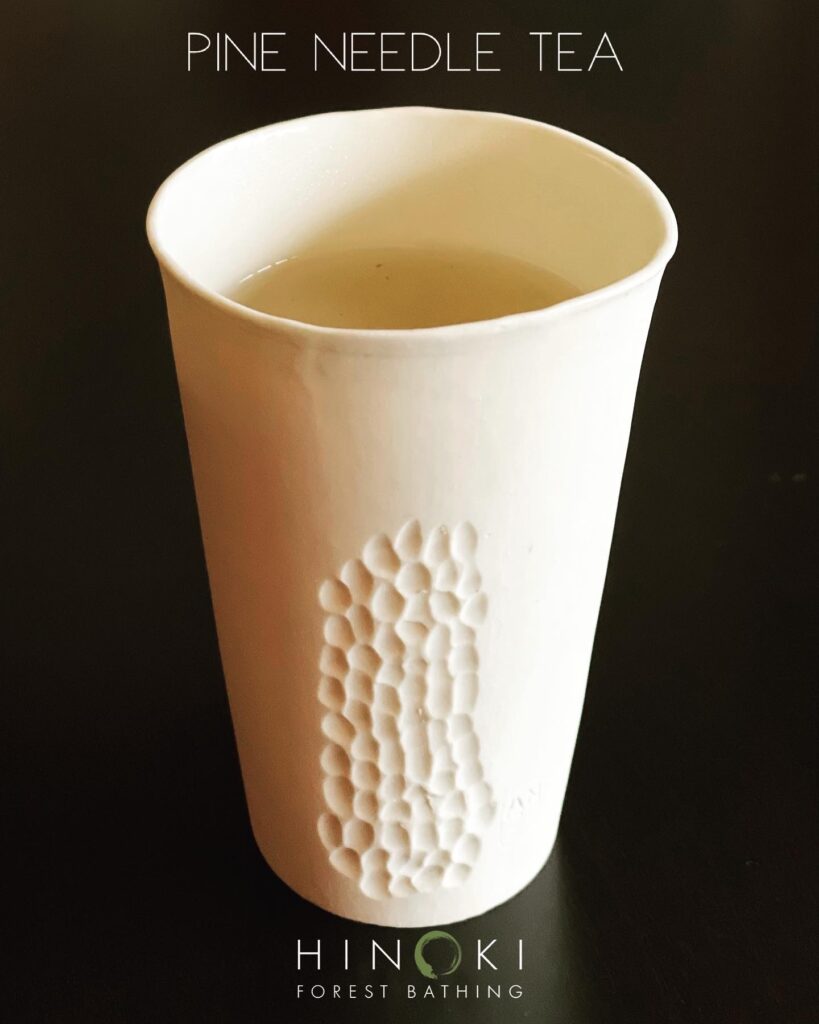
If you can, remember to drink your tea mindfully.
· With your eyes closed, feel the warmth of the tea travelling from the hot tea to tea cup to your hands. Feel where this warmth travels to.
· Keeping your eyes closed, smell your tea. What can you smell? What does it remind you of? Where does the scent travel to in your body?
· Open your eyes and notice the patterns of your tea cup. How does this make you feel?
· Then notice the colour of the tea and the reflection. Do you see yourself? Or the tree branches above you?
· Then listen to your tea. Remember, in Japan, you can lightly slurp your tea!
· Feel the tea travel from the cup to your tongue, down your throat. Where does the tea eventually travel to? Where do you most prominently feel it?
· Taste your tea. What do you notice? Does it remind you of something?
· Finally, enjoy your tea with your tree.
I hope you enjoy the taste and benefits of your homemade pine needle tea.
Yūgen
In our recent Hinode (sunrise) sessions, we learned about the Japanese word for awareness of the universe that triggers emotional responses that are too mysterious and deep for words. This word is yūgen.
There’s a tingling of the spine. A catch in the voice. A faint sensation as if a distant memory is falling from a height. When this happens, we know we are approaching the greatest of mysteries.
We experienced yūgen in many of our forest bathing sessions, including those at sunrise. Here are a couple photos that we cheekily took at the beginning of the sessions.
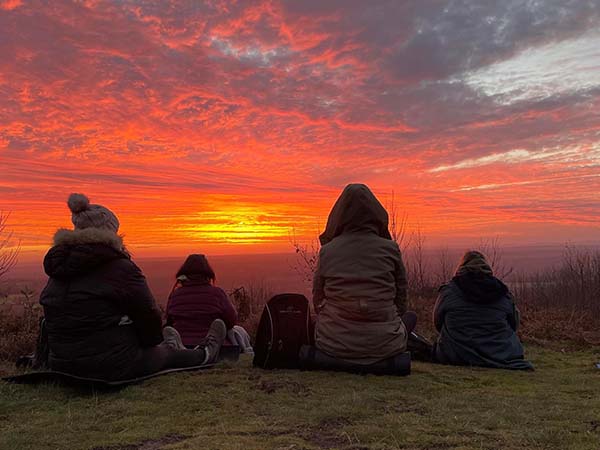
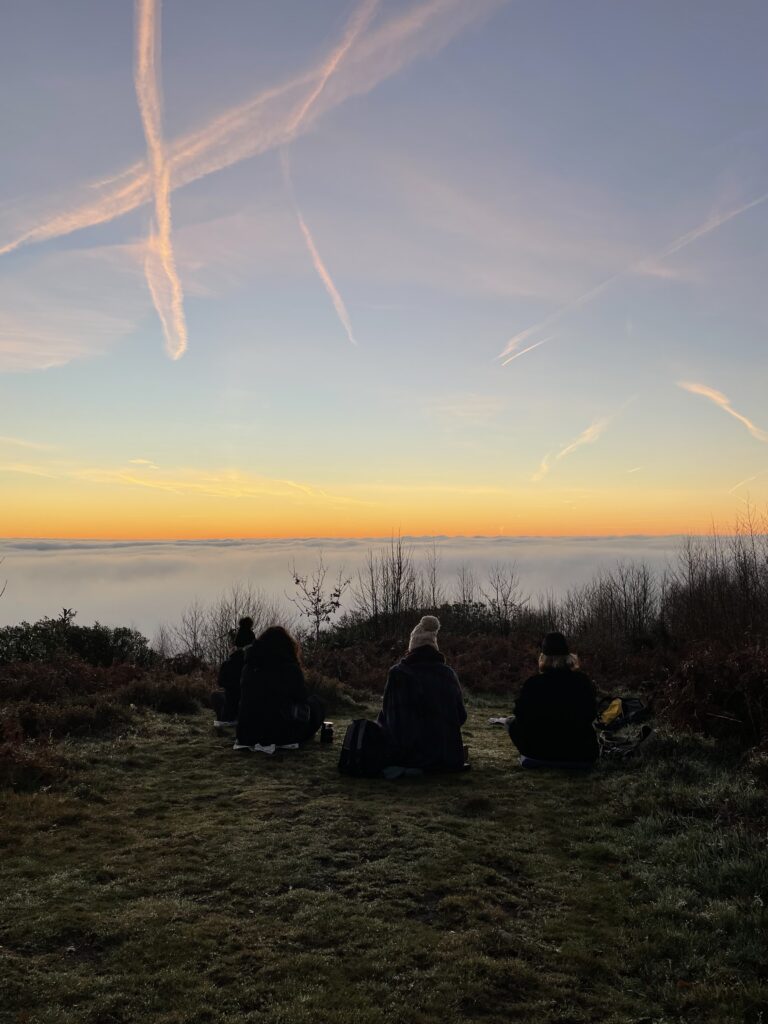
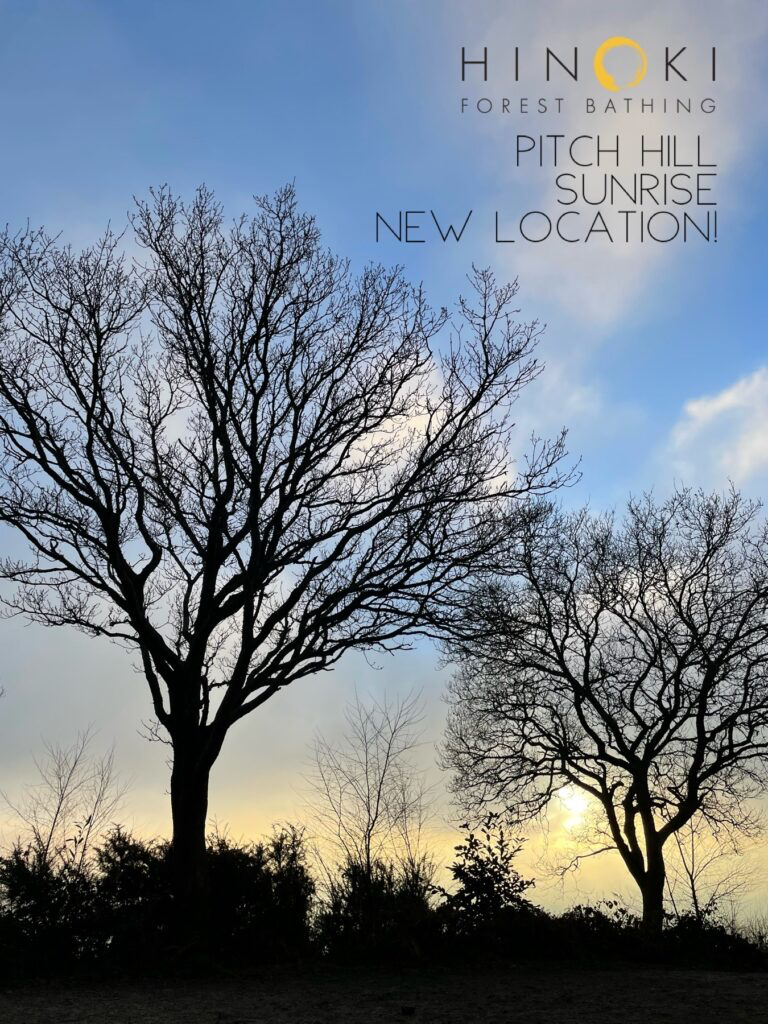
We have more Hinode (sunrise) sessions planned in January and February, including at our new location on Pitch Hill. See the end for more details.
New Locations!
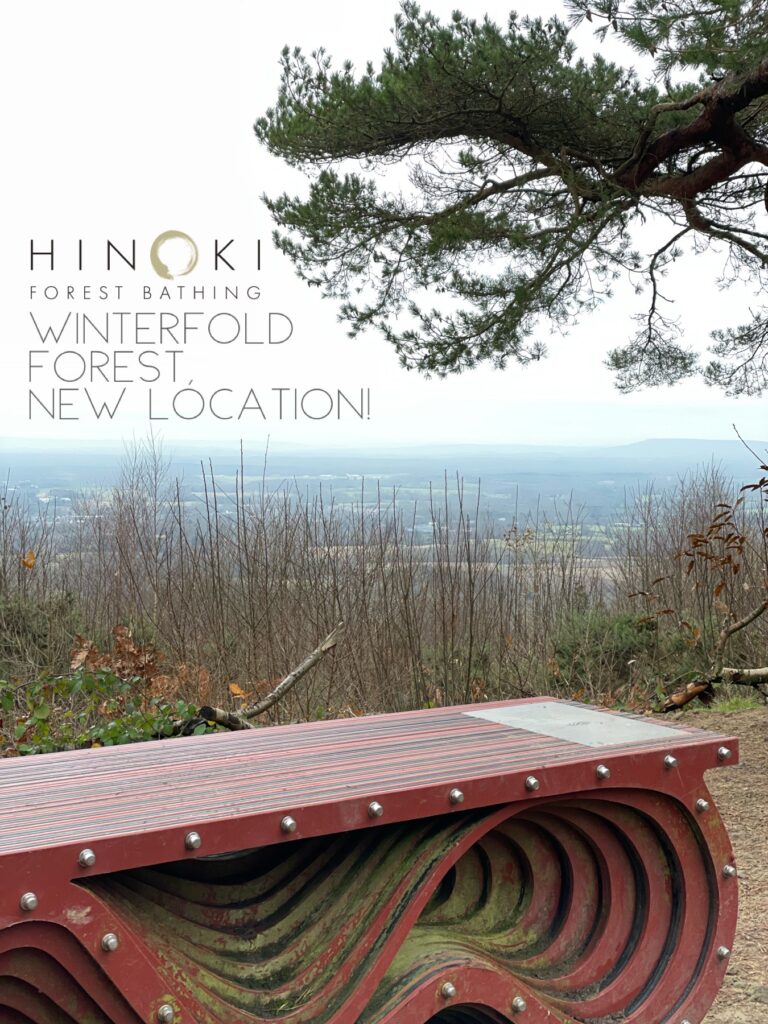
If you have been following me on Instagram or Facebook, you’ll know that I now have two more locations for my HINOKI forest bathing sessions: Winterfold Forest and Pitch Hill.
HINOKI Gift Cards
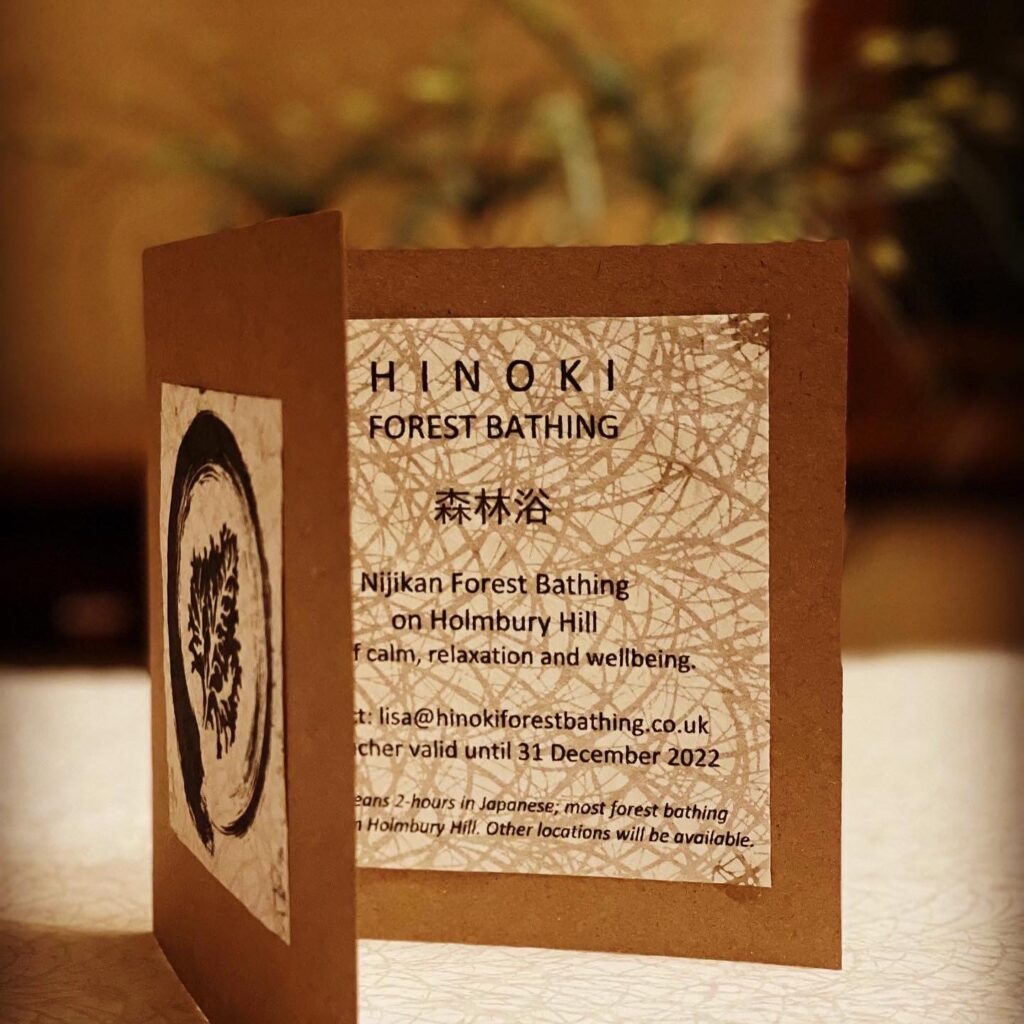
If you are interested in giving the gift of calm, relaxation and wellbeing, please email me to find out more. HINOKI gift cards are handmade with Japanese rice paper and are lovely, eco-friendly gifts to give to family and friends.
Thank you for reading my newsletter. I hope you have a wonderful start to the new year and I look forward to seeing you soon!
With warmest wishes,
Lisa

