In Japan, the seasons are more than weather, they’re a presence. You feel them in the air, in conversations, and especially in the food.
During my visit to Tokyo this past week (some of you may have seen a few joyful clips from Tokyo with my mother on Instagram!) I found myself noticing more about this favourite season of mine. Perhaps it’s because my mother is Japanese or because I live so seasonally myself. Foraging, forest bathing, and preparing teas have taught me to listen for the quiet voice of the land. Japan reminded me how deeply that voice is honoured there, especially through food.
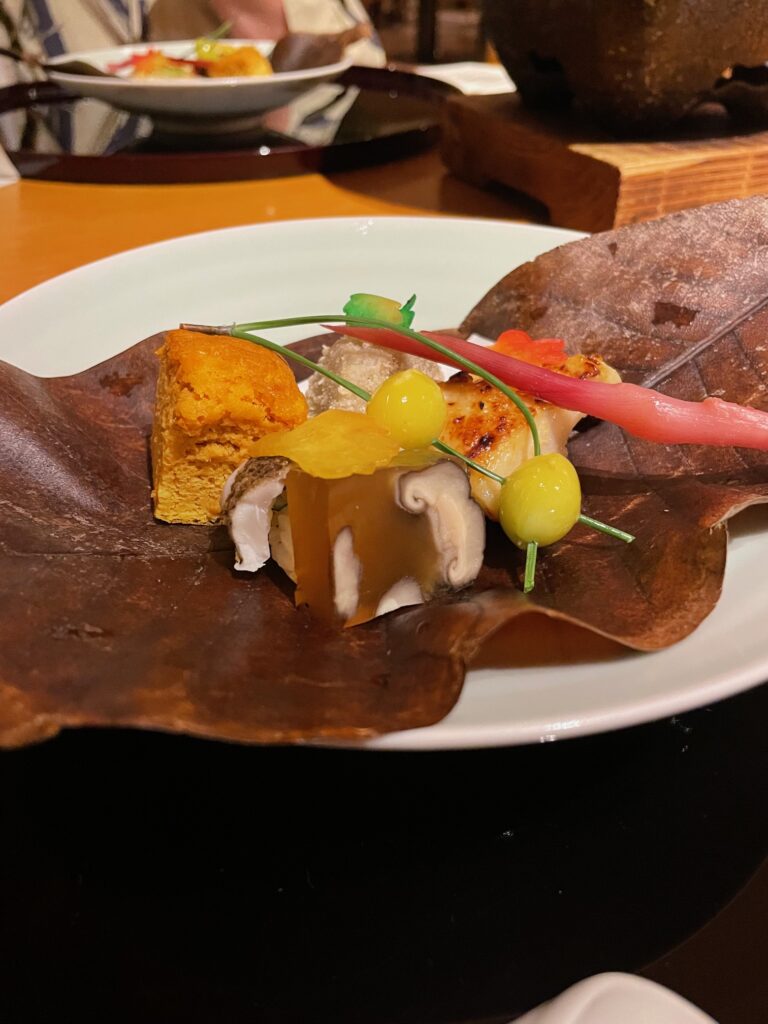
One course of many of a kaiseki (traditional, formal Japanese food) dinner, which included gingko nut, pumpkin, lotus root, amongst other tastes of the season, garnished with pine needle.
One idea stayed with me: a single, seasonal gesture. Not just a garnish, but a quiet note of presence. In Japan, such details are everywhere, a maple leaf resting beside a dish, a sprig of kinome (tree bud) atop silken tofu, or a curl of yuzu peel floating in broth. These aren’t embellishments. They’re messages.
They reflect shun (旬), the celebration of ingredients at their seasonal peak, and omotenashi, a spirit of care and attention that runs deeper than service (see my Insight on Omotenashi HERE). Together, they form a language of subtlety and timing, of knowing when to add just enough, and no more.
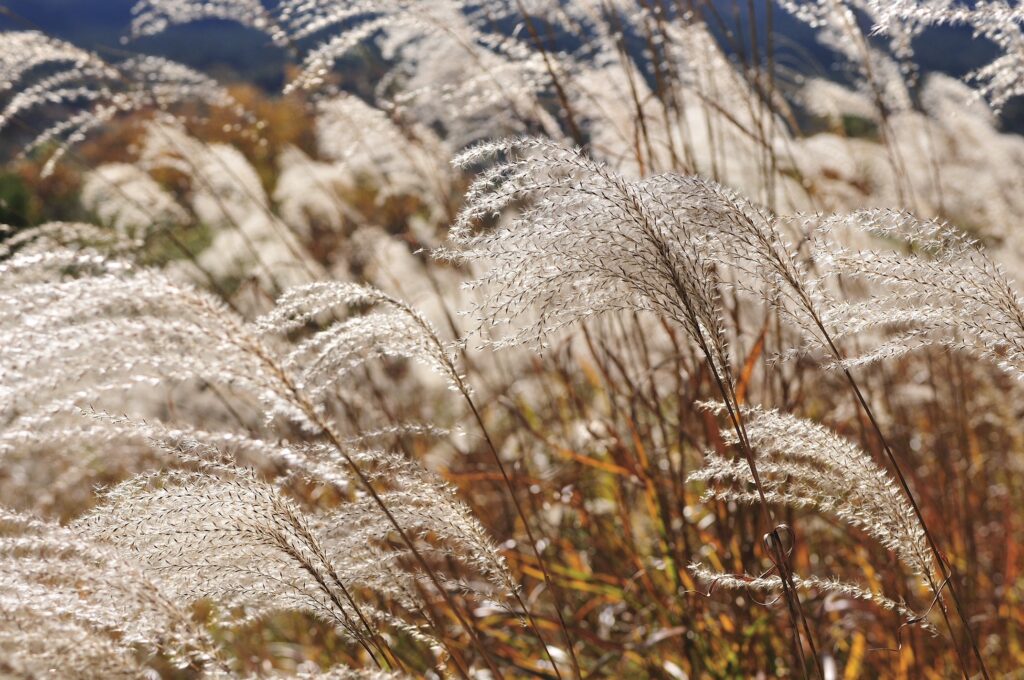
One evening, I was served a traditional washoku (traditional Japanese meal) tray. Nestled on it was a small wooden case, decorated not with flourish, but with Japanese silver grass, wild, soft, and unmistakably autumn. It mirrored the landscape outside and grounded the meal in a precise moment in time. That single gesture, so quiet, spoke volumes.
These seasonal touches, a leaf, a citrus curl, a branch of something just beginning to turn, are not always eaten. But they’re felt. They say: this is the season you are living in. This is the now.
I think about that often, how small details can change the way we experience food, place, and presence. It’s something I return to in the teas I serve after forest bathing walks, sunrise meditations, and sound baths. They’re simple blends, but seasonal, often gathered close to home, and meant to bring people back to the here and now. That, to me, is the spirit of shun and the heart of hospitality.

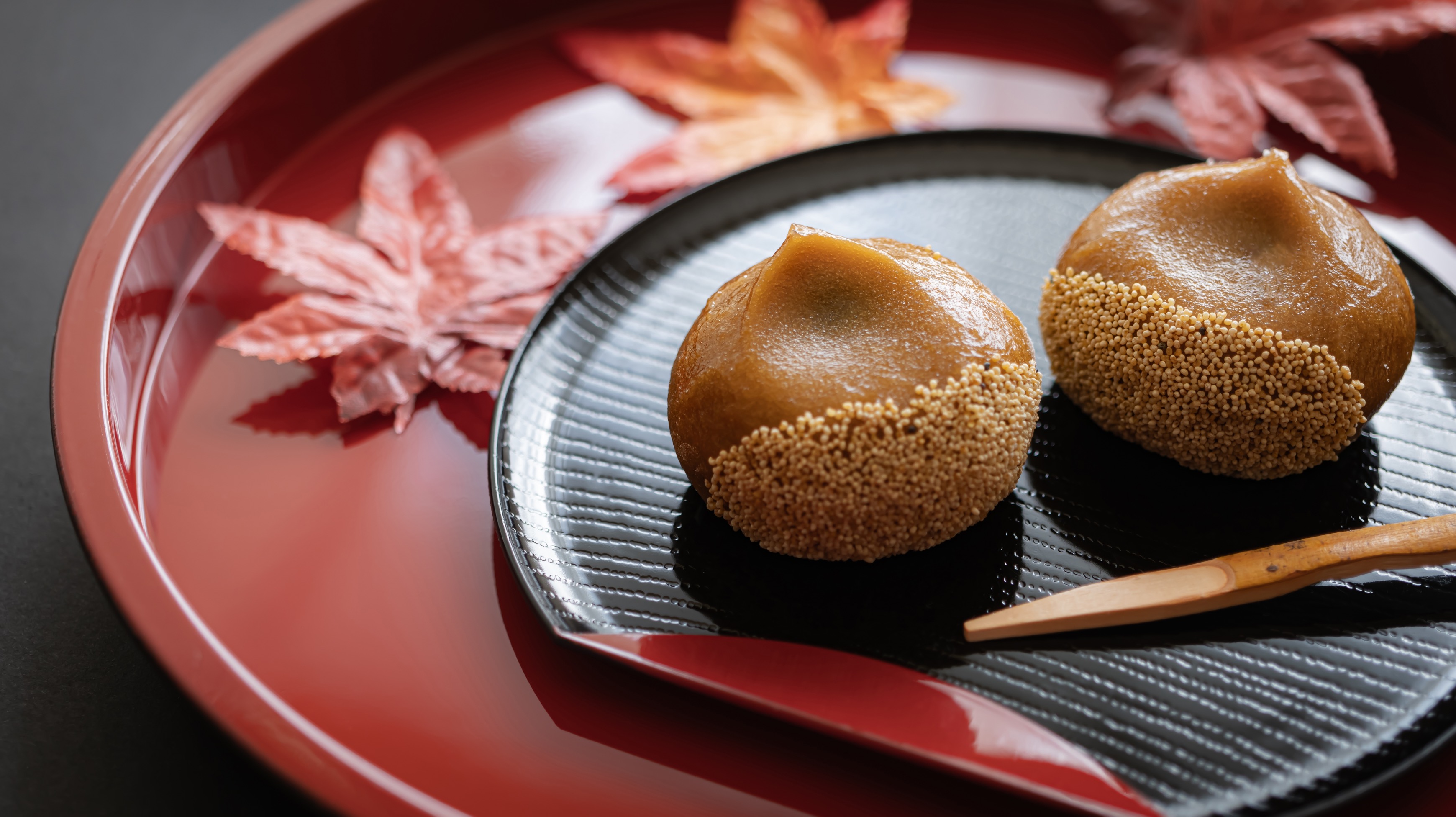
One afternoon in Japan, I was served wagashi, Japanese sweets, shaped like a chestnut, delicate and earthy. Paired with matcha, it tasted not like sweetness, but like autumn. Nothing flashy. Just precise.
Japanese food doesn’t try to overwhelm. It invites you to notice. To receive. That’s how I want to live. That’s how I want to serve.
These quiet seasonal gestures reminded me that even the smallest touch, a herb or a leaf, can carry deep meaning when it’s placed with care. A moment of beauty, a whisper of the season, a quiet reminder:
You are here. Now. Pay attention.
Thank you for reading this edition of HINOKI Insights. I hope our paths cross again soon!
Best wishes,
Lisa

